The Reality of Winter
Winter in Petawawa is not a polite suggestion. It is a full-commitment, five-month season that arrives in November, settles in with authority by December, and does not truly release its grip until sometime in April. If you are moving here from southern Ontario, the Maritimes, or anywhere west of the Prairies, you need to understand what that means in practical terms -- and then you need to decide to embrace it, because fighting winter in the Ottawa Valley is a losing strategy.
The numbers are straightforward. Average January temperatures in the Petawawa area hover around -13C during the day and drop to -23C or colder at night. Cold snaps regularly push the mercury to -30C, and with wind chill, it can feel like -40C or worse. These are not unusual events -- they happen multiple times every winter, sometimes lasting several days. The Ottawa Valley sits in an inland corridor that funnels Arctic air southward, and Petawawa catches the full force of it without the moderating influence of large bodies of water that protect cities closer to the Great Lakes.
Snowfall is substantial. The area typically receives between 200 and 250 centimetres of snow over the course of the season, though individual years can vary significantly. Snow often arrives in late October or November, and the ground is reliably snow-covered from December through March. Major storms can dump 30 centimetres or more in a single event, and lake-effect squalls from the Ottawa River occasionally add surprise accumulations to the forecast. The snow does not melt between storms -- it accumulates, compacts, and builds up over the course of the season until snowbanks along driveways and roads can be chest-high or taller.
All of that said, there is a reason people who love Petawawa often cite winter as one of the things they love most. A clear January morning after a fresh snowfall, with the sun hitting the pine trees and the Ottawa River frozen solid under a blue sky, is genuinely beautiful. The air is sharp and clean in a way that southern Ontario simply cannot match. And the activities that winter enables -- snowmobiling, skiing, skating, ice fishing -- are not consolation prizes. They are the main event. The people who thrive in Petawawa are the ones who see winter not as something to endure but as a season with its own gifts. That adjustment in mindset is the single most important thing you can do to enjoy your time here.
Winter Activities
If you are going to spend five months in winter, you had better have things to do in the snow. Petawawa delivers on that front with a range of activities that take full advantage of the cold, the snow, and the landscape.
Snowmobiling
Snowmobiling is enormous in the Ottawa Valley. The Ontario Federation of Snowmobile Clubs maintains a vast network of groomed trails, and the Petawawa area connects to hundreds of kilometres of riding that stretches in every direction. The local snowmobile club grooms trails that link to the broader district and provincial systems, meaning you can leave from near your home and ride for days if you choose. The terrain is varied -- forest trails, open fields, river corridors, and connecting routes between communities -- and the snow conditions in the Valley are reliably good from late December through early March.
For newcomers, buying or renting a snowmobile opens up a social world as much as a recreational one. Group rides, club events, and the snowmobile community's culture of trail hospitality -- stopping at warming huts, gas stations, and trailside restaurants along the route -- make it one of the best ways to meet people and explore the region in winter. If you have never ridden before, guided tours and rental operations in the area can get you started without a major equipment investment upfront.
Cross-Country Skiing and Snowshoeing
Cross-country skiing has a dedicated following in the Petawawa area. The Petawawa Research Forest and surrounding trail networks offer both groomed and ungroomed options, and the relatively flat terrain around town is ideal for classic-style skiing. For more adventurous skiers, backcountry trails in the Crown land south of town and in Algonquin Provincial Park provide challenging terrain with the reward of deep solitude.
Snowshoeing is perhaps the most accessible winter activity. With a pair of modern snowshoes, any trail becomes a winter trail, and the landscape that is green and buzzing with insects in July transforms into a quiet, snow-covered cathedral from December through March. The trails along the Ottawa River, through the research forest, and into the surrounding bush are all excellent for snowshoeing, and the activity requires no special skill beyond the ability to walk.
Skating
The Petawawa Civic Centre arena offers public skating sessions throughout the winter, and outdoor rinks appear around town as conditions allow. Hockey is the heartbeat of winter in most Ottawa Valley communities, and Petawawa is no exception. Minor hockey keeps the arena busy from early morning to late evening, and adult recreational leagues provide an outlet for players of all skill levels. Even if you are not a hockey player, an evening of public skating at the arena or on an outdoor rink is one of the simplest and most satisfying winter activities available.
Ice Fishing
When the Ottawa River and surrounding lakes freeze thick enough to support safe travel -- typically by late December or January -- the ice fishing community comes alive. Ice fishing huts dot the river and the lakes to the south and west of town, and anglers target walleye, pike, perch, and lake trout depending on the location. Ice fishing in the Ottawa Valley is as much a social activity as a sport. Groups set up huts, bring heaters and food, drill holes, and spend the day on the ice talking, telling stories, and occasionally catching fish. For newcomers, joining an experienced group is the best way to learn the spots, understand ice safety, and enjoy the experience properly.
Downhill Skiing
While Petawawa does not have a ski hill of its own, two options are within reasonable driving distance. Calabogie Peaks, about an hour and fifteen minutes south, is the largest ski resort in eastern Ontario, with 24 runs, a terrain park, and night skiing. Mount Pakenham, roughly 90 minutes east near Arnprior, offers a smaller but family-friendly experience with a good ski school for beginners. Neither is a destination resort in the Collingwood or Quebec sense, but both provide perfectly good day trips for families and recreational skiers.
Winter Driving
Winter driving in the Ottawa Valley is not optional skill -- it is a survival requirement. If you are coming from a milder climate or a city where winter driving means dealing with a bit of slush on the highway, the conditions here will demand more of you than you are used to.
Winter Tires
Install winter tires. This is not a suggestion. While Ontario does not legally mandate winter tires the way Quebec does, driving in the Petawawa area without them is genuinely dangerous. The roads here are cold enough for long enough that all-season tires harden and lose grip, and the combination of snow, ice, and plummeting temperatures creates conditions that only proper winter rubber can handle. Most local tire shops and garages can install and store your seasonal tires, and many insurance companies offer a discount for running winter tires, which helps offset the cost. Get them on by mid-November at the latest -- the first significant snowfall often arrives earlier than newcomers expect.
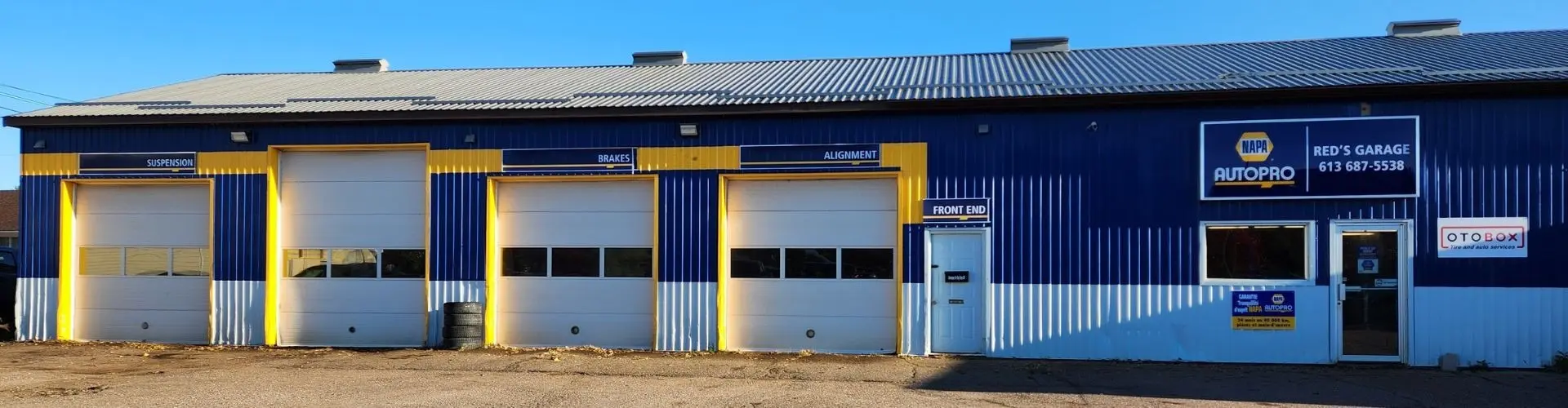
Winter driving demands reliable vehicles. Red's Garage and Auto Parts is NAPA AUTOPRO certified and can handle everything from winter tire swaps to full inspections.
Highway 17 Conditions
Highway 17 is Petawawa's lifeline to the outside world, connecting east to Pembroke and Ottawa and northwest to Deep River and beyond. In winter, the highway demands respect. It is a two-lane highway for much of its length, exposed to wind and drifting snow, and prone to whiteout conditions during storms. Plows do a creditable job, but the sheer volume of snow and the length of highway they must cover mean that conditions can deteriorate quickly between passes.
A few practical rules for Highway 17 in winter: always check conditions before a longer drive, keep your gas tank at least half full, carry an emergency kit in your vehicle (blankets, snacks, flashlight, booster cables, a small shovel), and know that sometimes the safest decision is not to drive at all. School buses and non-essential travel are cancelled regularly during major storms, and no meeting or shopping trip is worth risking your life on an icy highway. Check our weather page for current conditions and forecasts before heading out.
Daily Driving Tips
Beyond the highway, daily driving in Petawawa during winter requires a few habits that become second nature over time. Start your car early and let it warm up -- not for the engine's sake (modern engines do not need extended idling) but to defrost the windshield and warm the cabin enough that you can see and operate the controls safely. Brush snow off your entire vehicle before driving, including the roof -- snow sliding off the roof onto your windshield at a stop light is a frightening experience, and snow blowing off your roof onto the car behind you is dangerous and can draw a fine.
Give yourself extra stopping distance, brake gently, steer smoothly, and remember that four-wheel drive helps you go but does not help you stop. Black ice is a constant hazard, especially on bridges, overpasses, and shaded stretches of road in early morning. If you are new to winter driving, consider taking a winter driving course -- the skills you learn may save your life.
Preparing Your Home
An Ottawa Valley winter will find every weakness in your home. Drafty windows, an unreliable furnace, poor insulation, and unprotected pipes can turn a cold snap from an inconvenience into an emergency. Preparing your home before winter arrives is essential, and the time to do it is September or October -- not January.
Heating Systems
Your furnace is the most important appliance in your house from November through April. Have it inspected and serviced before the heating season begins. A qualified HVAC technician will check the heat exchanger, clean or replace the filter, inspect the ignition system, and ensure everything is operating safely and efficiently. If your furnace is older, this annual inspection is doubly important -- a cracked heat exchanger can leak carbon monoxide, and a mid-winter furnace failure at -30C is a genuine emergency.

Don't wait for the first cold snap. EasY HVAC Services offers furnace inspections, duct cleaning, and 24/7 emergency heating service.
Make sure your carbon monoxide detectors and smoke alarms are working. Replace batteries at the start of the season, and if your detectors are more than seven years old, replace the units entirely. Carbon monoxide poisoning is a real risk in tightly sealed winter homes with gas appliances, and working detectors are your first and most important line of defence.
Insulation and Weatherproofing
Check your windows and doors for drafts. Caulk gaps around window frames, apply weatherstripping to doors that let cold air in, and consider window insulation film for older single-pane windows. Insulation in your attic should meet or exceed current building code requirements -- heat loss through the roof is one of the biggest energy drains in winter and can contribute to ice dam formation on your eaves. If your home has a basement, ensure the rim joists are insulated and that any cracks in the foundation are sealed.
Pipes and Plumbing
Frozen pipes are a common and costly winter problem. Before the temperature drops, disconnect and drain outdoor hoses, shut off exterior water lines if your system has indoor shutoff valves, and insulate any pipes that run through unheated spaces like crawl spaces, garages, or exterior walls. During extreme cold snaps, opening cabinet doors under kitchen and bathroom sinks to allow warm air to circulate around the pipes can prevent freezing. If you are going to be away from home for more than a day or two in winter, do not turn your thermostat below 15C, and consider having someone check on the house.
Snow Removal
You will need a plan for snow removal, and you will need it before the first storm. Options include doing it yourself with a shovel and snowblower, hiring a plow service, or some combination. Many residents invest in a good snowblower -- the amount of snow that accumulates over a Petawawa winter makes hand shoveling impractical for all but the smallest driveways. Plow services are available and reasonably priced, but book early in the fall, as the best operators fill their client lists before the season begins.
Keep your walkways and driveway clear of ice as well as snow. Sand, salt, or ice-melting products should be on hand throughout the season. The town plows residential streets, but it takes time after a major storm to get to every road, and you should plan for the possibility of being snowed in for a few hours after a significant snowfall. Keep a basic supply of groceries and essentials on hand so that a storm day does not become a crisis.
What to Wear
Dressing for a Petawawa winter is not about fashion -- it is about physics. The goal is to trap warm air against your body, wick moisture away from your skin, block wind, and maintain enough flexibility to function. The layering system used by outdoor enthusiasts and military personnel works because it addresses all of these needs simultaneously.
The Layering System
Base layer: Start with a moisture-wicking base layer against your skin. Merino wool is the gold standard -- it wicks sweat, retains warmth when damp, and resists odour. Synthetic base layers (polyester blends) are a more affordable alternative and dry faster. Avoid cotton as a base layer at all costs. Cotton absorbs moisture, holds it against your skin, and loses all insulating value when wet. In serious cold, a wet cotton base layer can become genuinely dangerous.
Mid layer: The mid layer provides insulation. Fleece jackets, wool sweaters, down vests, or synthetic insulated layers all work. The key is loft -- trapped air is what insulates you, so bulky, fluffy materials outperform thin, dense ones. On moderately cold days (-10C to -15C), a single mid layer over your base may suffice. On bitter days (-25C and below), add a second mid layer or switch to a heavier insulated piece.
Outer layer: Your shell needs to block wind and resist moisture. A good winter parka with a windproof, water-resistant outer fabric and quality insulation is worth the investment. Look for a hood that cinches tight, a high collar that protects your chin and neck, and a length that covers your hips at minimum. For pants, insulated snow pants or wind-resistant softshell pants over thermal underwear will keep you comfortable during extended time outdoors.
Extremities
Your hands, feet, and head lose heat faster than the rest of your body, and they are the first things to get painfully cold. Invest in quality winter boots rated to at least -30C -- brands like Sorel, Baffin, and Kamik make boots designed for Canadian winters that actually deliver on their temperature ratings. Avoid fashion boots, running shoes, or anything with thin soles and no insulation. Your feet will thank you by approximately December 1.
For hands, mittens are warmer than gloves because they keep your fingers together, sharing body heat. A good pair of insulated mittens with a waterproof shell will handle most conditions. For activities requiring dexterity, liner gloves inside insulated gloves provide warmth and flexibility. Carry hand warmers in your pockets for extra insurance on the coldest days.
A warm toque (winter hat) and a neck gaiter or balaclava are essential. Your head radiates a significant amount of heat, and exposed skin on your face and neck is vulnerable to frostbite in wind chill conditions below -25C. Do not underestimate this -- frostbite can develop in minutes on exposed skin at the temperatures Petawawa regularly experiences.
Warming Up
After a day spent outside in the cold -- whether on the snowmobile trails, the skating rink, the ski slopes, or just shovelling the driveway for the third time this week -- there is a particular pleasure in warming up with good food and drink. Petawawa and the surrounding area offer several options for that post-cold-weather reward.
On cold winter evenings, nothing beats a warm meal at Madameek Restaurant — their shawarma and falafel are local favourites. 613-687-6872
The local restaurant scene may be modest in size, but on a cold winter evening, a hot meal at a favourite spot feels like a luxury. Hearty pub food, comfort meals, and warming soups are the order of the season, and the locally owned restaurants in Petawawa and Pembroke tend to lean into winter menus that match the weather. Pizza delivery on a snowy Friday night is practically a community tradition, and the debate over which local shop makes the best pie is a conversation that can sustain an entire dinner party.
After a day on the snowmobile trails, warm up with a craft beer at Dog House Brewing Company's cozy taproom.
At home, winter cooking in Petawawa tends toward the substantial. Slow cooker meals, soups, stews, chili, and baking become staples as the temperature drops. The Petawawa Farmers' Market is seasonal, but stocking up on preserves, local honey, and frozen meats during the fall market season provides ingredients for winter cooking that connect you to the local food culture. Baking is practically a competitive sport in the Ottawa Valley, and if you make a good loaf of bread or a batch of butter tarts, your social currency will increase dramatically.
Hot chocolate, tea, and coffee consumption increases by what feels like an order of magnitude between November and March. A good insulated travel mug is not a luxury item in Petawawa -- it is survival equipment. The local coffee shops and drive-throughs do steady business all winter, and having a warm drink in hand while watching your kids play hockey or waiting for the school bus in -25C makes the cold almost bearable. Almost.
Winter Community Life
Winter does not shut Petawawa down. If anything, the shared experience of enduring and enjoying a serious Canadian winter brings the community closer together. The events calendar stays active, the sports leagues run at full tilt, and the social fabric of the town is arguably stronger in winter than in any other season.
Holiday Season
The Christmas season in Petawawa is a genuine highlight. The annual Santa Claus Parade along Petawawa Boulevard draws the entire community out to the street, bundled in parkas and blankets, waving at floats and collecting candy. Local businesses, community groups, military units, and service organizations all contribute floats and entries, and the parade has a homegrown, authentic quality that large-city parades often lack. After the parade, many families head to local restaurants or home for hot chocolate, and the evening has a warmth to it that transcends the temperature.
Christmas events extend beyond the parade. Tree lighting ceremonies, holiday markets, school concerts, church services, and community gatherings fill the calendar through December. The Military Family Resource Centre runs holiday programming that is especially valuable for families with a deployed member, providing support and connection during a time of year when absence is felt most acutely. For details on upcoming seasonal events, visit our events page.
Winter Sports and Recreation
Minor hockey is the organizing principle of many Petawawa families' winter schedules. Early morning practices, weekend tournaments, and evening games at the Civic Centre arena create a rhythm that carries the community from October through March. The rink is a social hub as much as a sports facility -- parents gather in the stands, kids run through the hallways, and the smell of arena coffee and hot dogs is the unofficial scent of winter in Petawawa.
Adult recreational sports -- hockey leagues, volleyball, basketball, and curling at the Pembroke Curling Club -- provide social outlets and physical activity through the long winter months. The base also runs fitness programs and sports leagues that keep military members and their families active. For those who prefer individual pursuits, the gym, the pool, and the local fitness studios see their busiest months in winter, when cabin fever drives people to seek structured activity.
The Social Season
Winter is, paradoxically, the most social season in Petawawa. With outdoor activities limited to the hardy and the well-dressed, people turn to indoor gatherings, dinner parties, games nights, and community events for connection. The craft beer scene provides a gathering place for adults looking to socialize after the kids are in bed. Community organizations hold fundraisers, galas, and social events throughout the winter months. And the simple act of inviting neighbours over for a meal takes on greater significance when the alternative is another evening staring at the snow through the living room window.
The military community has its own winter social calendar, including mess events, unit holiday parties, and regimental functions that bring serving members and their families together. These events are an important part of maintaining morale and unit cohesion during the long winter months, and they often include civilians who work on the base or are connected to the military community through friendship or family ties.
By March, even the most committed winter lovers are ready for spring. The days grow noticeably longer, the sun has real warmth by mid-afternoon, and the first signs of thaw -- dripping eaves, softening snowbanks, the occasional bare patch of ground -- generate an excitement that people in milder climates will never fully understand. When spring finally arrives in the Ottawa Valley, it is not just a change of season. It is a celebration. But by then, you will have earned it -- and you will have a winter's worth of stories, friendships, and skills to show for the experience. For summer activities and what to look forward to when the snow finally melts, see our Summer in Petawawa Guide.